Digital literacy according to Wikipedia is an individual’s ability to find, evaluate, and communicate information using digital devices or digital media platforms, as well as the ability to navigate, evaluate, create, and communicate information in digital environments. It allows people to access information, use online services, and take part in ongoing learning. Financial inclusion, in turn, is defined by the Central Bank of Nigeria as the state in which adult Nigerians have easy access to a broad range of formal financial services that meet their needs. These two concepts are usually tracked separately, but in today’s world they essentially function as one continuous skill: a person cannot access a financial service through a platform they do not know how to use.
Financial inclusion is often measured by access to financial services: how many people hold a bank account, how many are within range of a mobile payment outlet, etc. But increasingly, financial services are delivered through digital platforms, so that measure of access assumes a second, unmeasured kind of access: whether a person has a working device and internet connection to use those platforms in the first place. Even that is not enough. A resident who owns a smartphone but cannot navigate a mobile banking app, or a trader who receives digital payments but does not understand how to protect them, is financially included on paper only, because using a digital financial tool safely requires a level of comfort and skill that owning the tool does not guarantee.
The scale of the financial inclusion and digital literacy gaps is significant. The EFInA Access to Financial Services (A2F) 2023 survey found that 74 percent of Nigerian adults had access to financial services, and the Central Bank of Nigeria has since set a target of 95 percent financial inclusion by 2028 under its Nigeria Payments System Vision 2028. On the digital side, the National Information Technology Development Agency (NITDA) puts Nigeria’s digital literacy rate at 50 percent, up from 44 percent in 2021, against government targets of 70 percent by 2027 and 95 percent by 2030. The shortfall in both areas is more obvious outside major cities: Nigeria’s overall internet penetration crossed 50 percent only in late 2025, according to the Nigerian Communications Commission (NCC), and the NCC’s own data shows a stark urban-rural split, with internet usage at 57 percent in urban areas compared to just 23 percent in rural areas, among the widest such gaps on the continent. Rural Nigerians also remain considerably more likely to be financially excluded than their urban counterparts, at 37 percent compared to 17 percent.
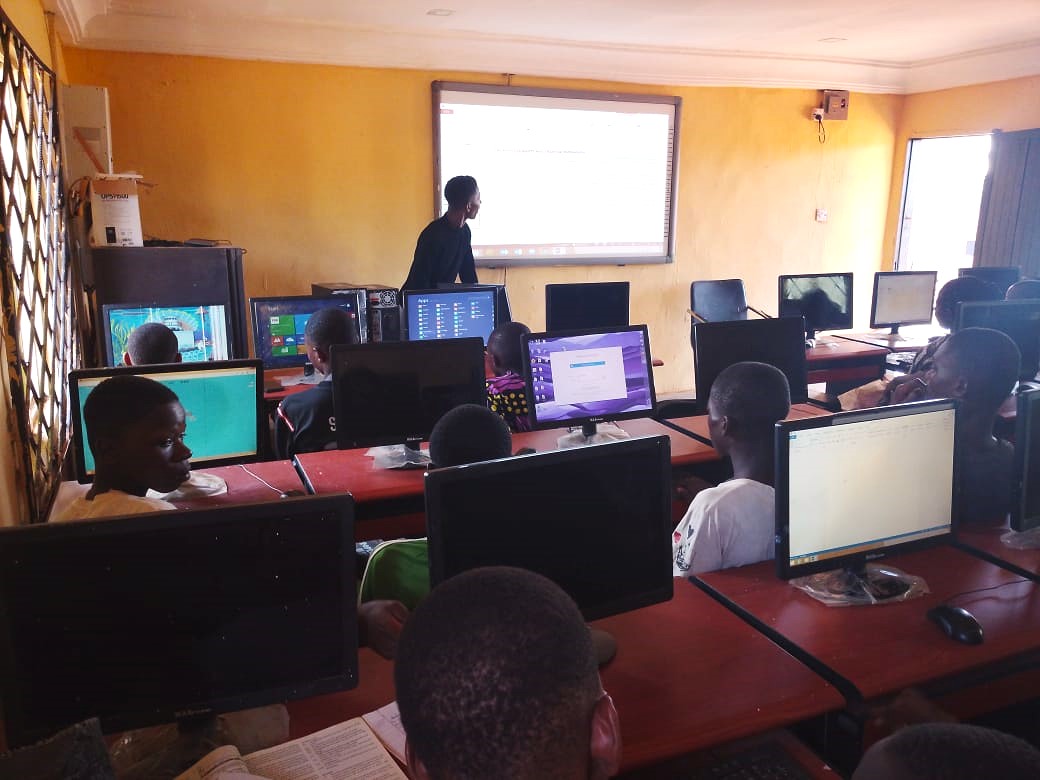
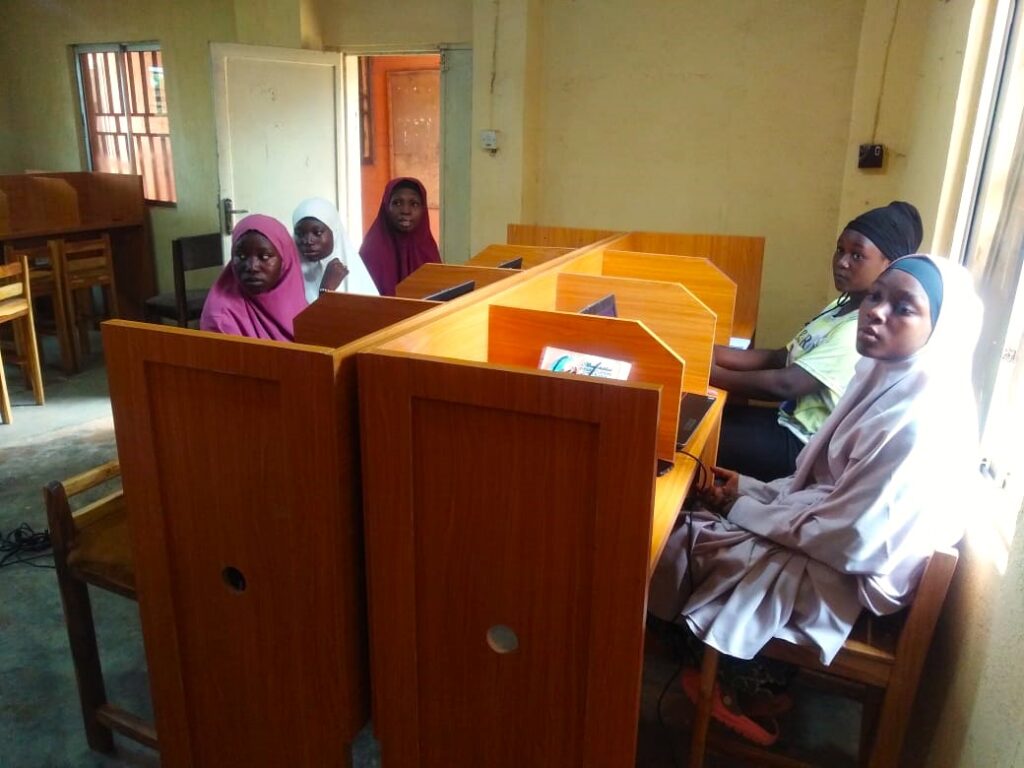
This is exactly where the Community Self-Built Sustainable Connectivity Hubs project comes in. Sponsored by the UK Foreign, Commonwealth & Development Office (FCDO) under its Digital Access Programme (DAP) and implemented by Initiative for Digital Inclusion (IDI), the project seeks to help close the financial and digital literacy gaps in ten selected communities across Nigeria.
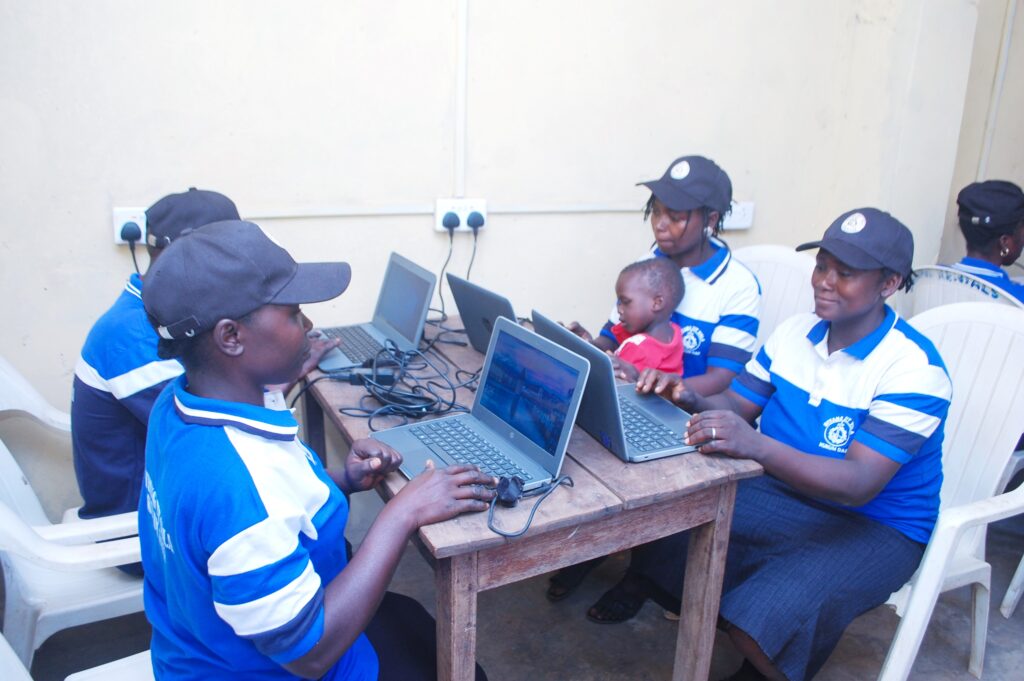
At the Kukum Daji Biyan-Zit Self-Built Community Connectivity Hub in Kaura LGA, Kaduna State, delivered through IDI’s collaboration with Fantsuam Foundation, the financial inclusion angle is not incidental. The Biyan-Zit women, members of Village Savings and Loan Association (VSLA) group, had already been managing informal savings and lending in the community, and several of them contributed financially toward building the hub itself—a facility they helped build rather than one delivered from outside. The same women who make up these VSLA groups are also among those going through digital literacy training at the hub, so the connection is direct: the confidence they gain navigating a device and moving information securely is confidence they carry into their own savings group. This could mean keeping records digitally or engaging more comfortably with the mobile money and digital platforms on which mainstream financial inclusion depends.
Similar patterns are showing up at other hub sites. At Bayan Loco in Jema’a LGA, Kaduna State, 42 participants are going through training, while at Okporenyi in Bende LGA, Abia State, 78 participants have completed the programme. Poor road infrastructure had delayed the hub’s construction at the Okporenyi site the previous year. In both cases, the training curriculum treats digital confidence as a prerequisite skill, not an add-on: participants need to trust a device and a connection before they will trust it with their savings.
None of this suggests that digital literacy alone solves financial exclusion. Distance to formal financial institutions, low and irregular incomes, and limited trust in digital platforms all remain real barriers in many of these communities. But it does suggest that any financial inclusion strategy that skips digital literacy is building on an unstable foundation. A person cannot be meaningfully included in a financial system through a platform they do not know how to use.
As the Community Self-Built Sustainable Connectivity Hubs project continues rolling out training across its ten sites, digital literacy and financial activity are not taught as one combined curriculum, but they are not treated as unrelated either: they run alongside each other, and each strengthens the other’s reach. The hubs are not just points of connectivity; they are spaces where residents are building the digital confidence needed to extend their financial activity into the wider digital economy.