Nigeria’s digital transformation agenda, guided by the National Digital Economy Policy and Strategy (NDEPS) 2020–2030 and the Nigerian National Broadband Plan (NNBP) 2020–2025, reflects a national commitment to expanding broadband access and accelerating participation in the digital economy. One of the key targets of the Broadband Plan was to achieve 70% broadband penetration nationwide, underscoring the goal of ensuring broader access to digital opportunities for Nigerians.
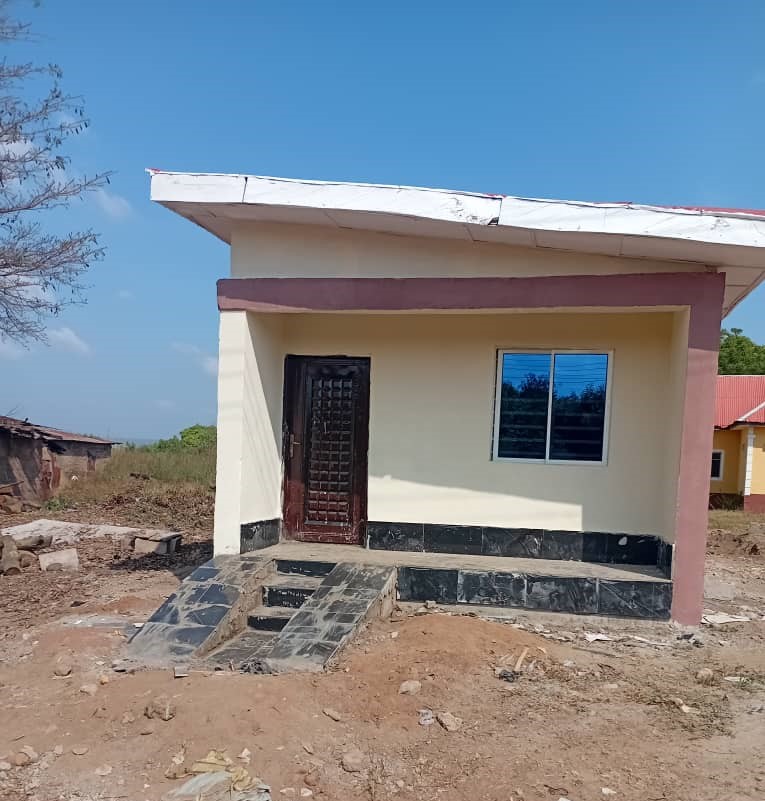
Building on this policy direction, the Community Self-Built Sustainable Connectivity Hub project, sponsored by the Foreign, Commonwealth and Development Office (FCDO) of the United Kingdom Government under its Digital Access Programme (DAP), supports the establishment of 10 community connectivity hubs across Nigeria. As the implementing partner, Initiative for Digital Inclusion (IDI) is working directly with unserved and underserved communities to translate national digital inclusion ambitions into practical, community-driven implementation.
From this project, several important lessons have emerged about what it truly takes to build sustainable connectivity in unserved and underserved communities. These lessons go beyond infrastructure to touch on four communities, community ownership, women’s leadership, digital literacy, energy sustainability, inclusion, and long-term viability. They offer practical insights for designing and scaling community connectivity models that not only provide internet access, but also enable meaningful use of digital technologies for social and economic development.
Our experience from implementing these hubs so far in four communities i.e. Okporoenyi (Bende LGA, Abia State), Olayinka (Ifelodun LGA, Kwara State), Bayan Loco (Jema’a LGA, Kaduna State), and Kukum-Daji (Kaura LGA, Kaduna State) has yielded valuable lessons about what it truly takes to build sustainable digital inclusion at the community level. Here are six key lessons from our work.
Lesson 1: Community Ownership Drives Sustainability
One of the strongest lessons from our work is that connectivity projects are more sustainable when communities actively participate in planning, governance, and management; not just as recipients, but as co-owners of the infrastructure they helped build.
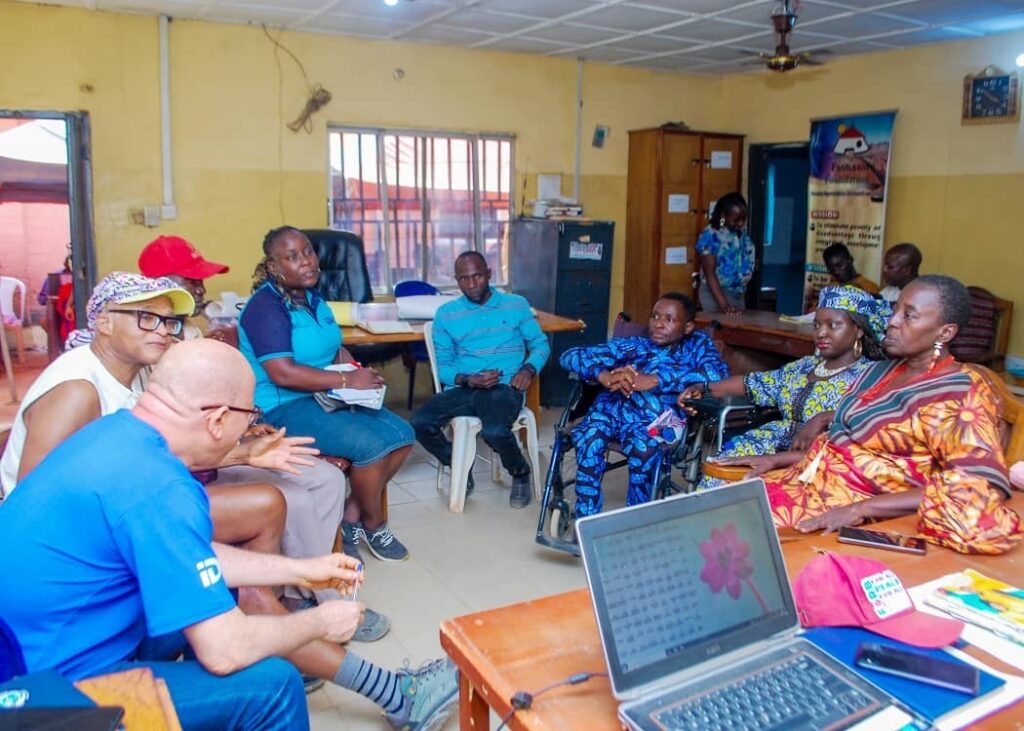
In each of the communities, Hub Management Teams of between three and nine members were established before the hubs were inaugurated. These teams include women, youth, local leaders, and persons with disabilities. In Bayan Loco and Kukum-Daji, Village Savings and Loan Association (VSLA) women’s association serve as anchor governance actors, with women holding leadership positions in the hub management teams. The results have been visible: both communities recorded the highest number of users and earned the highest community satisfaction ratings in the programme. That kind of ownership cannot be created from the outside. It has to grow from within.
Lesson 2: Inclusion Must Be Intentional
Disability and gender inclusion must be designed into projects from the very start, not as an afterthought once infrastructure is already in place.
Before any of the four hubs were inaugurated, disability-inclusive features were installed as a standard requirement, not an optional addition. These include wheelchair ramps for persons with physical disabilities and sign-language instructor for the deaf and hard of hearing. Persons with disabilities (PWDs) are represented on governance committees at Bayan Loco and Kukum-Daji and are actively participating in digital literacy training at both sites.
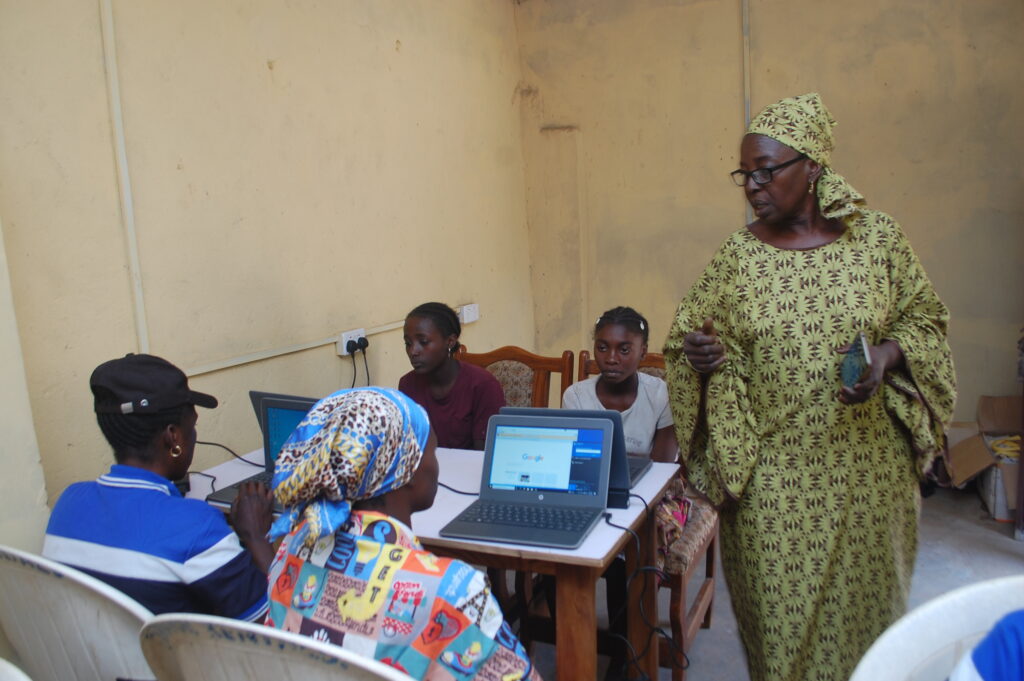
On the gender side, women accounted for the majority of participants in digital literacy training activities across the hubs. At Kukum-Daji, 28 of 41 participants were women, representing 68.3%. At Bayan Loco, 24 of 42 participants were women, representing 57.2%. At Okporoenyi, 31 participants were enrolled, comprising both women and youth. This did not happen by chance. It happened because IDI encouraged communities to make women and persons with disabilities (PWDs) central to their hub management team and training.
Lesson 3: Women Are Not Just Participants, But Leaders
One of the most compelling findings from our work is that women are not passive beneficiaries of digital inclusion. When given the right structures, they become its most active drivers.
At Bayan Loco and Kukum-Daji, VSLA women’s group were included in the hub governance from the beginning, with women holding formal leadership positions in Hub Management Teams. At Kukum-Daji, VSLA women went further, making financial contributions toward the hub construction. At Bayan Loco, the VSLA women’s group anchored both the governance and community mobilisation of the hub from the earliest stages of implementation.
Both communities recorded the highest daily users and community satisfaction ratings in the programme. In digital literacy training, women accounted for 68.3% of participants at Kukum-Daji and 57.2% at Bayan Loco, both exceeding the programme target of at least 50%.
When women lead, communities follow. Meaningful digital inclusion requires designing governance structures that give women genuine authority, and then trusting them to lead.
Lesson 4: Reliable Energy Enables Reliable Connectivity
Connectivity and energy are inseparable. A hub with internet access but unreliable power is a hub that cannot fulfil its purpose.
When the idea of solar-powered hubs was introduced, residents across all four communities were very excited. For communities accustomed to unstable electricity supply, solar power was not just a technical solution; it was a promise of reliability.
Our experience shows how much that promise matters when kept, and what happens when it is not. Across all the hubs, improved solar power systems meet energy needs, providing 21 to 24 hours of uninterrupted electricity daily, with strong daily usage and high community satisfaction.
The quality of solar technology selected at the design and installation stage determines whether a hub can operate reliably and whether communities will trust and use it. Sustainable connectivity requires sustainable energy, and the two must be planned together from the start.
Lesson 5: Digital Skills Turn Access into Opportunity
Internet access alone does not create impact. What creates impact is the ability to use that access purposefully.
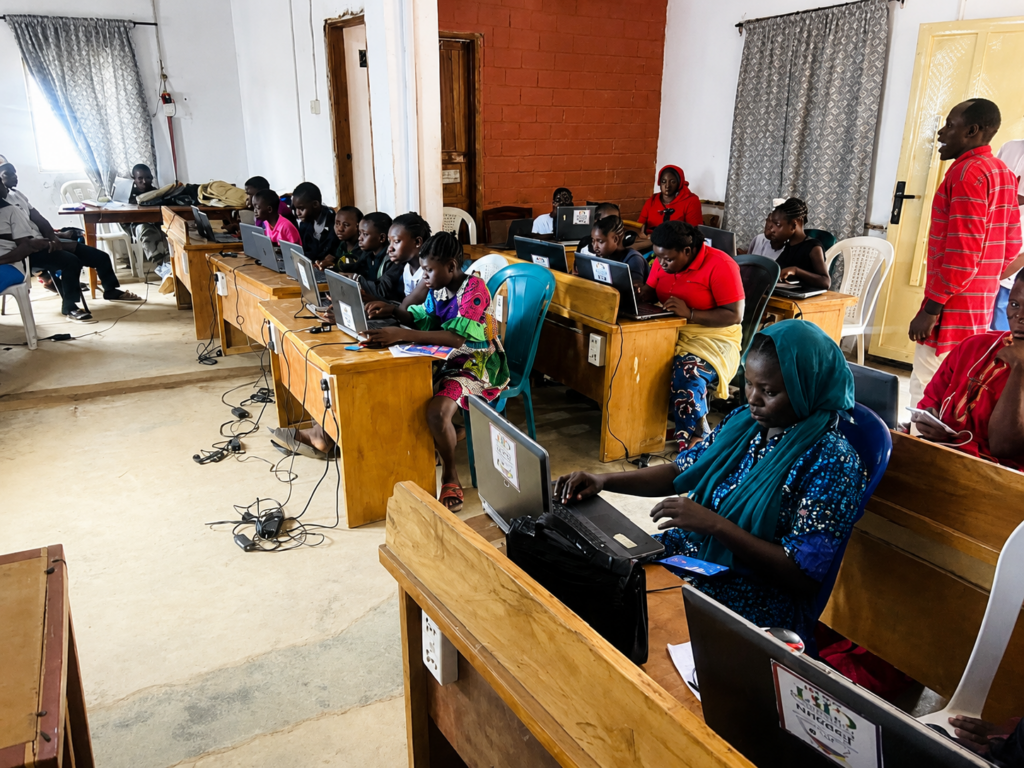
Digital literacy training has been completed at Kukum-Daji with 41 participants enrolled, and is ongoing at Bayan Loco with 42 participants and Okporoenyi with 34 participants.
Community members who receive structured training do not just visit the hub; they use it productively to access information, services, learning opportunities, and economic resources online. Training has not yet commenced at Olayinka, and the gap is noticeable: the community is at an earlier stage of meaningful hub utilisation. This experience confirms that access without skills is an incomplete intervention. IDI treats digital literacy as a core offering in each hub, not as an add-on. As more hubs become operational, digital literacy programmes will be introduced to help community residents leverage their connectivity for meaningful social and economic opportunities.
Lesson 6: Local Capacity Strengthens Long-Term Impact
The long-term sustainability of any community hub depends on the people closest to it having the skills to keep it running.
Across Bayan Loco, Kukum-Daji, Olayinka, and Okporoenyi, between three and nine community technicians have been trained per hub and are performing routine maintenance independently. Community-based monitoring and evaluation committees have been constituted at all three hubs where monitoring visits were conducted in the first quarter. Hub attendance registers and daily user logs are maintained by Hub Management Teams at all hubs. When something goes wrong, communities no longer have to wait for an outsider to respond. The deliberately and systematically built local capacity is one of the most important investments IDI makes in every community we work with.
Looking Ahead
The experience from IDI’s Community Connectivity Hubs reinforces a central lesson: digital inclusion is not achieved simply by connecting communities, but by enabling them to use connectivity in meaningful and sustainable ways.
As reflected across the implementation of these hubs, progress toward Nigeria’s digital economy and broadband objectives requires more than infrastructure deployment. It demands deliberate investment in community ownership, women’s leadership, digital literacy, inclusive participation, and sustainable energy systems. These elements are critical to ensuring that connectivity infrastructure is effectively utilised, properly maintained, and capable of delivering long-term social and economic value.
At IDI, these lessons continue to shape our approach. We remain committed to designing and implementing community-centred digital infrastructure that empowers unserved and underserved communities to actively participate in Nigeria’s digital future.